
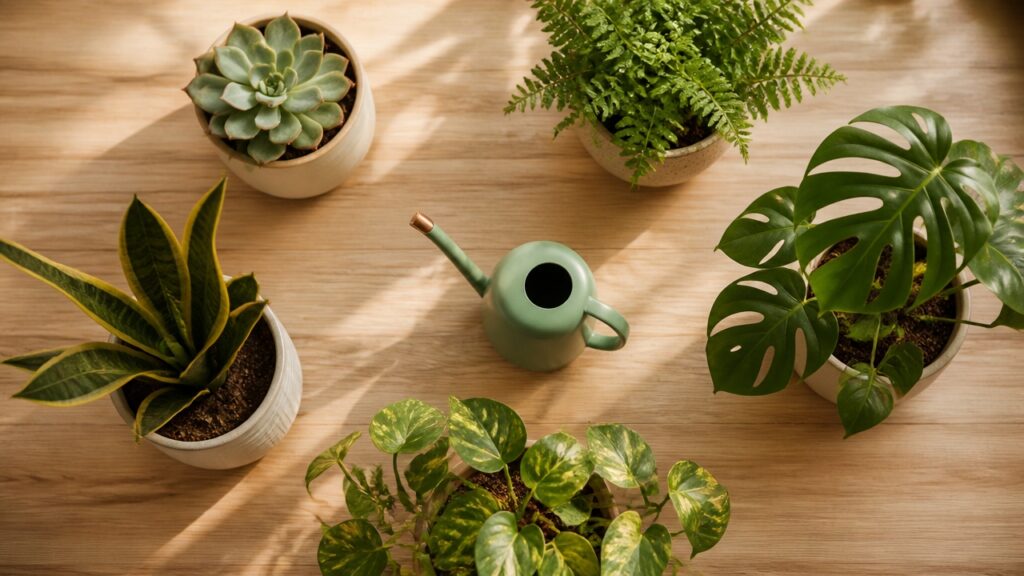
Plant watering can feel like a mystery at first, but it’s really just about matching water to what each plant actually needs. Ferns love moisture and need frequent watering, while pothos plants prefer consistent but not excessive attention, and succulents thrive on neglect more than anything else.
Getting the watering rhythm wrong is one of the quickest ways to damage a plant. Too much water rots the roots, too little leaves leaves crispy and brown.
The good news is that most struggling plants can recover once you figure out what went wrong.
The real secret isn’t following a strict schedule but learning to read your soil. Stick your finger an inch into the dirt and check if it feels dry or damp. This simple habit tells you everything you need to know about whether your plant is thirsty right now or perfectly happy as is.
Different plants have different personalities, and that’s part of what makes indoor gardening interesting. Once you understand whether you’re caring for a thirsty fern, a moderate pothos, or a drought-tolerant succulent, watering becomes less guesswork and more confidence.
Why Plants Need Different Watering Schedules
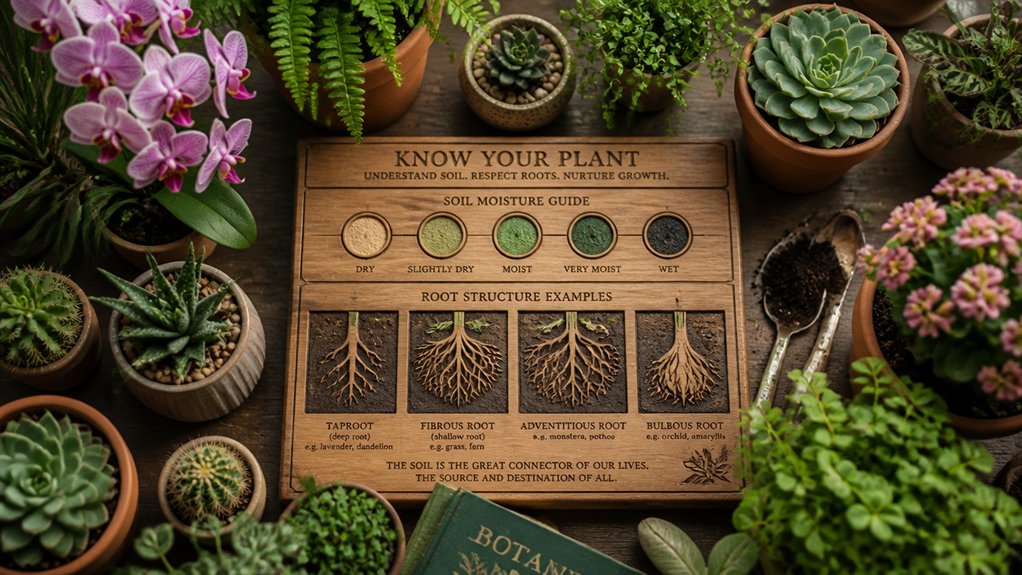
Different plants require different amounts of water because they come from different environments and have different root systems. Succulents, originating from dry deserts, store water in their leaves and need infrequent watering. Tropical plants like ferns come from humid rainforests and prefer consistently moist soil.
Root depth also matters greatly. Shallow-rooted plants such as herbs dry out faster than deep-rooted plants like trees. Container size affects watering frequency too. Small pots dry quickly, while large pots retain moisture longer.
Soil type influences water retention as well. Sandy soil drains fast, requiring more frequent watering, whereas clay soil holds water and needs less. Season, temperature, and humidity levels also determine how often plants need water. Understanding these factors helps gardeners provide appropriate care.
Quick Reference Chart: Watering Frequency by Plant Type
A practical guide simplifies plant care by organizing watering needs into basic categories. Most common houseplants fall into three groups: high-water plants, moderate-water plants, and low-water plants.
High-water varieties, including ferns and peace lilies, require soil that stays consistently moist. These plants need watering every two to three days, depending on humidity and light conditions.
Moderate-water plants, such as pothos and snake plants, prefer soil that dries slightly between waterings. Watering once weekly typically meets their needs.
Low-water plants, including succulents and cacti, store moisture in their tissues. These varieties need watering only every two to three weeks, or when soil is completely dry.
Understanding these categories helps gardeners match watering frequency to specific plant requirements, reducing guesswork and improving plant health.
How to Check If Your Plant Needs Water Right Now?
When should gardeners water their plants? The answer depends on checking soil moisture directly. Inserting a finger into the soil about one inch deep reveals whether water is needed. If the soil feels dry, watering is appropriate. If it feels moist, the plant can wait several days.
Another method involves lifting the pot to assess its weight. A heavy pot indicates adequate soil moisture, while a light pot suggests the plant requires water soon.
Observing leaf appearance also provides clues. Drooping, yellowing leaves may signal either overwatering or underwatering, requiring closer soil inspection to determine the actual problem.
Different plants have varying moisture needs. Succulents prefer drier conditions, while ferns need consistently moist soil. Checking individual plant requirements guarantees proper watering timing and prevents root damage.
Three Watering Mistakes That Kill Plants: And How to Avoid Them
Even with knowledge of proper soil checks and plant-specific needs, gardeners still commit watering errors that damage or kill their plants. The first mistake involves overwatering, which causes root rot in succulents, pothos, and peace lilies. Roots cannot access oxygen when soil remains constantly wet, leading to fungal growth and plant death.
The second error is using water that is too cold, which shocks tropical plants like orchids and African violets. Room-temperature water prevents stress and allows proper nutrient absorption. The third mistake involves watering on a fixed schedule regardless of seasonal changes or environmental conditions.
Plants require less water during winter months and in humid climates. Adjusting watering frequency based on soil moisture and weather conditions prevents these common errors and promotes healthier plant growth.
Adjust Your Routine by Season and Environment
Since seasonal changes and environmental conditions directly affect soil moisture levels, gardeners must modify their watering schedules accordingly. During summer months, plants require more frequent watering due to increased heat and evaporation rates. Winter demands less water because plant growth slows and soil retains moisture longer. Spring and fall typically require moderate watering as temperatures remain mild.
Environmental factors also influence water needs considerably. Plants in direct sunlight dry out faster than those in shade. Indoor plants near heating vents need more frequent watering, while those in humid basements require less.
Container plants dry out quicker than garden beds. Wind exposure increases evaporation, necessitating additional water. Soil type matters as well; sandy soil drains rapidly and needs more frequent watering, while clay soil retains moisture longer.
Frequently Asked Questions
What’s the Best Time of Day to Water My Plants?
Early morning represents the ideal watering period for most plants. During this time, soil absorbs moisture efficiently before daytime heat increases evaporation rates. Morning watering also allows foliage to dry quickly, reducing disease susceptibility and fungal growth throughout the day.
Can I Use Tap Water or Should I Use Filtered Water?
Tap water is generally suitable for most plants. However, if tap water contains high chlorine or mineral levels, filtered or distilled water may be preferable. One should observe plant health and adjust accordingly.
How Do I Know if I’m Overwatering or Underwatering My Plants?
Like a plant’s silent cry for help, overwatering manifests as yellowing leaves and root rot, while underwatering produces brown, crispy foliage. Checking soil moisture by touching two inches below the surface reveals the truth.
Should I Water From the Top or Bottom of the Pot?
Both methods have merit. Top watering allows direct soil hydration and flushes accumulated salts. Bottom watering promotes root development by encouraging upward water absorption. Most gardeners alternate between methods or choose based on individual plant needs and preferences.
What Type of Water Temperature Is Best for Watering Plants?
Room temperature water, between 65-75°F, proves most beneficial for plant health. Cold water shocks roots and slows nutrient absorption, while excessively warm water can damage delicate root systems. Lukewarm water remains ideal for peak plant growth.
Conclusion
Proper watering schedules depend on plant type, soil moisture, and environmental conditions. High-water plants like ferns need frequent attention, while succulents require minimal care. Checking soil before watering prevents common mistakes such as overwatering. Seasonal changes and indoor temperatures affect how quickly soil dries. Like ancient gardeners using sundials to track time, modern plant owners must observe their plants’ needs carefully, adjusting routines accordingly for ideal growth.