
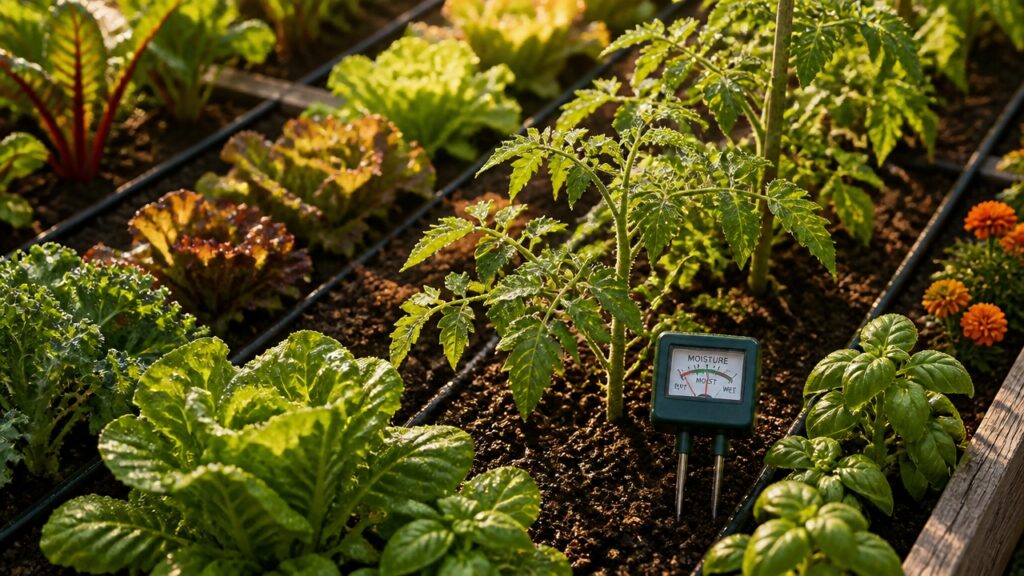
Walking through a thriving vegetable garden, you’ll notice that tomatoes, lettuce, and peppers don’t all drink water the same way. Each plant has its own rhythm, and getting it right transforms your harvest from mediocre to abundant. The truth is, watering isn’t one-size-fits-all, and that’s actually what makes gardening so rewarding.
Your soil tells a story about how much moisture it holds. Clay soil drinks slowly and keeps water longer, while sandy soil drains fast and needs frequent refills. Add in your local rainfall patterns and climate, and suddenly you understand why your neighbor’s schedule might not work for your garden at all.
Smart gardeners have discovered that drip irrigation and mulch do heavy lifting for you. These tools deliver water exactly where roots need it, cut down evaporation on hot days, and let you water less often while your plants thrive. It feels almost like cheating, but it’s just working smarter.
Signs of trouble appear faster than you might expect. Wilting leaves, yellowing stems, or crusty soil surface are your garden’s way of asking for help.
Paying attention to these signals throughout spring, summer, and fall lets you adjust your schedule before plants suffer, keeping your vegetables happy and productive all season long.
Tailor Your Watering Schedule by Plant Type and Stage
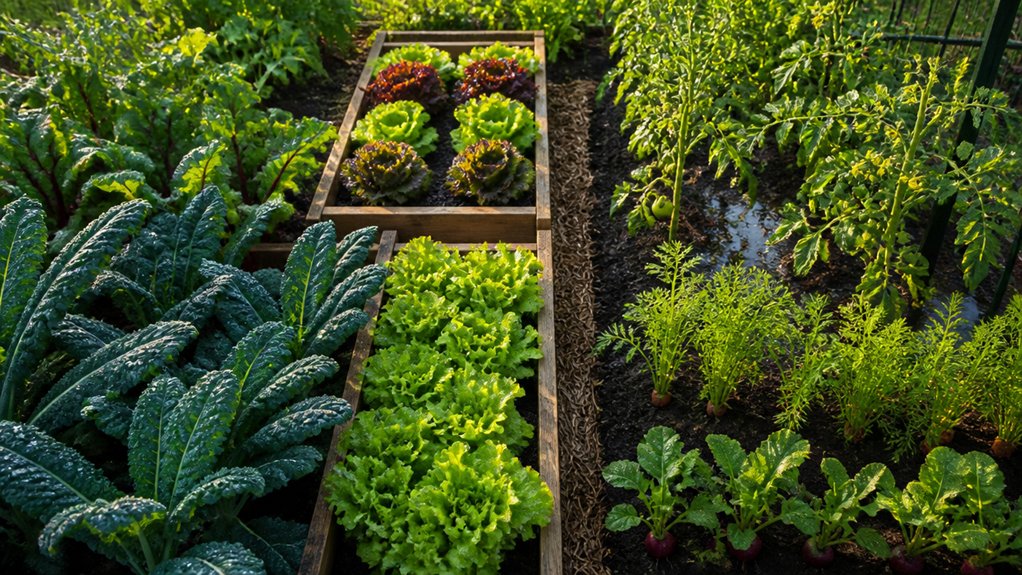
Different vegetables require different amounts of water depending on their type and growth stage. Leafy greens like lettuce and spinach need consistent moisture, requiring shallow, frequent watering. Root vegetables such as carrots and beets need deeper watering but less frequently. Fruiting plants like tomatoes and peppers require steady water during flowering and fruit development stages.
Seedlings demand gentle, regular moisture to prevent drying out. Established plants tolerate longer intervals between waterings.
During hot weather, most vegetables need more frequent irrigation. In cooler seasons, watering frequency decreases. Tracking plant maturity helps determine water needs. Young plants in early growth stages need lighter watering. Plants approaching harvest often require increased water for peak yield and quality.
Set Watering Frequency: How Soil and Climate Change Your Schedule
While plant type and growth stage shape overall water needs, soil composition and local climate conditions determine the actual watering frequency a gardener should follow. Sandy soil drains quickly, requiring more frequent watering than clay soil, which retains moisture longer. Loamy soil, containing balanced sand and clay, needs moderate watering schedules.
Climate factors greatly affect frequency. Hot, dry regions demand daily or twice-daily watering, while cool, humid areas need less frequent applications. Rainfall also plays a role; gardeners in wet climates water less often than those in arid zones.
Checking soil moisture before watering prevents overwatering. Gardeners should insert a finger two inches into soil near plants. If soil feels dry, watering is needed. If moist, waiting another day is appropriate.
Install Drip Systems and Mulch to Execute Your Schedule
Executing a consistent watering schedule requires the right tools and techniques to deliver water efficiently. Drip irrigation systems provide targeted water delivery directly to plant roots, reducing waste and promoting consistent soil moisture. These systems include soaker hoses, drip lines, and emitters that release water slowly over time.
Mulch serves as a complementary tool, creating a protective layer around plants that conserves soil moisture and regulates temperature. Organic mulch options include wood chips, straw, and compost, which also break down to improve soil structure.
Together, drip systems and mulch minimize evaporation losses and decrease watering frequency needs. They create stable growing conditions for your plants. Installing drip irrigation takes initial planning and materials, but reduces manual watering demands throughout the growing season.
Build Your Spring Watering Schedule
As temperatures rise and plants emerge from dormancy, spring requires thoughtful adjustments to watering routines. Gardeners should assess soil moisture by inserting a finger two inches deep, checking if the earth feels dry or moist.
Early spring vegetables like lettuce, peas, and spinach need consistent moisture but not waterlogged conditions. Newly planted seedlings require more frequent watering than established plants, typically every two to three days depending on rainfall and temperature.
Mulch applied around plants helps retain soil moisture and reduces watering frequency. Drip irrigation systems deliver water directly to root zones, minimizing waste and disease risk. Monitoring weather patterns allows gardeners to reduce scheduled watering during rainy periods, preventing overwatering and root rot.
Adjust Your Watering Schedule for Summer Heat
Summer heat intensifies water demands for vegetable gardens, requiring more frequent watering schedules than spring conditions. Temperatures above 80 degrees increase evaporation rates, meaning soil dries faster. Gardeners should water early morning or late evening to minimize loss.
Most vegetables need one to two inches of water weekly during summer, though this varies by plant type and soil composition. Tomatoes, peppers, and squash require consistent moisture, while beans tolerate slightly drier conditions.
Sandy soils drain quickly and need more frequent watering than clay soils. Mulching around plants helps retain soil moisture and regulates temperature. Checking soil moisture two to three inches below the surface determines watering necessity. If soil feels dry at that depth, irrigation is needed.
Drip systems or soaker hoses deliver water efficiently directly to roots.
Spot Underwatering and Overwatering Signs Early
Spot Underwatering and Overwatering Signs Early
Even with proper watering techniques in place, gardeners must learn to recognize when plants receive too much or too little water.
Underwatered plants display wilting leaves, dry soil, and stunted growth. Tomatoes and peppers show these signs quickly when moisture becomes insufficient. Overwatered plants develop yellowing leaves, root rot, and fungal diseases. Squash and cucumbers become susceptible to these problems with excess moisture.
Gardeners should check soil moisture regularly by inserting a finger two inches deep into the earth. Dry soil indicates underwatering needs, while soggy soil suggests overwatering issues. Observing leaf color, firmness, and overall plant appearance provides additional diagnostic information. Early detection allows gardeners to adjust watering frequency before serious damage occurs to vegetables.
Adjust Your Fall Watering Schedule
Cooler temperatures and shorter daylight hours arrive with fall, bringing considerable changes to vegetable garden watering needs. Evaporation decreases greatly, so gardeners should reduce watering frequency compared to summer schedules. Most fall vegetables, including lettuce, spinach, and broccoli, require less moisture as growth slows naturally.
Check soil moisture before watering by inserting a finger two inches deep. Water only when soil feels dry at that depth. Early morning watering remains ideal, preventing disease and allowing foliage to dry before nightfall.
Reduce frequency to once or twice weekly, depending on rainfall and local conditions. Monitor weather patterns closely, since fall rain can supplement garden irrigation considerably. Adjust schedules further as temperatures drop into late autumn and winter approaches.
Track and Adapt Your Schedule for Weather Changes
How should gardeners respond when unexpected rain arrives or temperatures shift dramatically? Tracking weather patterns helps gardeners adjust watering accordingly. When rain occurs, gardeners should skip scheduled watering to avoid overwatering, which causes root rot and fungal diseases.
During heat waves, plants need more frequent watering since soil dries faster. Gardeners can monitor soil moisture by inserting a finger two inches deep into the earth. If soil feels dry at that depth, watering is necessary.
Keeping a simple log of rainfall amounts, temperature highs, and watering dates provides useful reference information. This record reveals patterns over weeks and months, enabling gardeners to refine their schedules. Checking long-range forecasts allows for proactive adjustments before weather changes impact plant health considerably.
Frequently Asked Questions
What Time of Day Is Best to Water Vegetables?
Early morning, between dawn and mid-morning, is ideal for watering vegetables. This timing allows plants to absorb moisture before heat increases, reduces disease risk by permitting foliage drying, and minimizes water loss through evaporation.
Can I Use Rainwater Collected in Barrels for Watering?
Yes, gardeners can use collected rainwater for vegetables. Rainwater barrels provide a free, chemical-free watering source that is ideal for most plants. This sustainable method reduces water bills while supporting environmentally conscious gardening practices throughout the growing season.
How Do I Know if My Garden Needs Deep Watering?
A gardener notices tomato plants wilting despite surface moisture. Gardeners can determine deep watering needs by checking soil moisture six inches below the surface. If it feels dry at that depth, deep watering is necessary to encourage strong root development.
Should I Water Vegetables From Above or at Soil Level?
Watering at soil level proves more effective than overhead watering. Direct irrigation at the base minimizes water waste through evaporation, reduces disease risk by keeping foliage dry, and guarantees moisture reaches plant roots where needed most.
What’s the Ideal Water Temperature for Vegetable Plants?
Vegetable plants thrive best with water temperatures between 60-70°F. Cool water mimics natural rainfall and prevents root shock, while excessively warm water can damage delicate root systems and promote fungal diseases in the soil.
Conclusion
A garden’s watering schedule serves as its lifeline, connecting plants to essential moisture across seasons. By understanding soil needs, climate patterns, and individual plant requirements, gardeners establish a sustainable rhythm. Drip irrigation and mulch act as guardians, preserving water while reducing waste. Consistent monitoring and seasonal adjustments keep this delicate balance intact, transforming a basic schedule into a foundation for thriving vegetables throughout the year.