
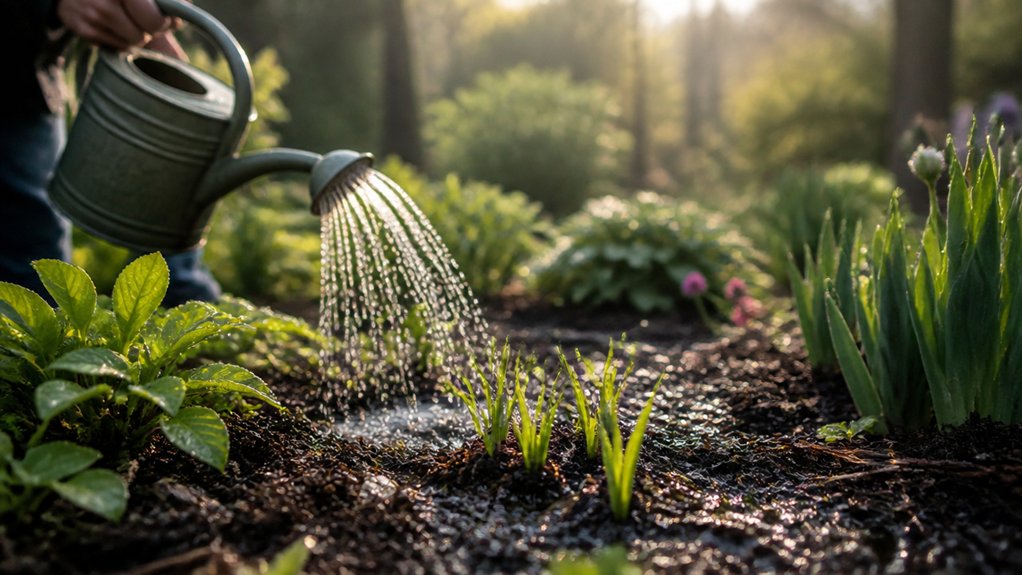
Picture yourself stepping outside at dawn, watering can in hand, watching droplets catch the early light. This simple habit of early morning watering is genuinely one of the most effective things you can do for your garden. Water applied before the heat of the day reduces disease pressure and cuts evaporation losses significantly, letting more moisture reach plant roots where it actually matters.
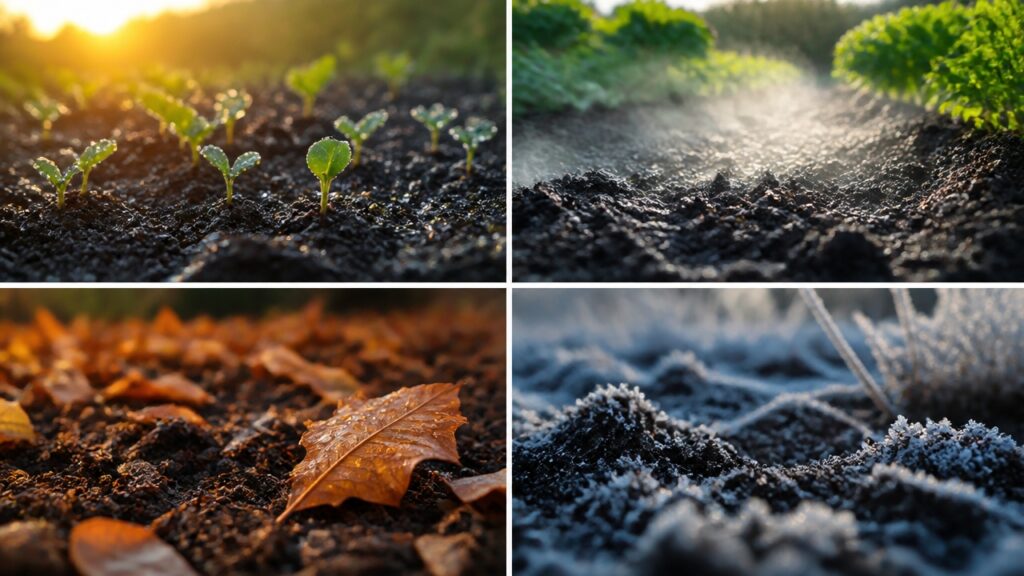
The truth is, your garden’s thirst changes completely from season to season. Spring brings growth spurts that need consistent moisture, while summer’s heat demands deeper, more frequent watering.
Fall slows everything down as plants prepare to rest, and winter dormancy means most gardens need almost no water at all. Soil type, rainfall patterns, and how much mulch you’ve spread all shift these needs too.
Getting the timing and depth right for each season makes a real difference in how your plants perform. A garden that gets watered thoughtfully through the year will show vibrant growth and resilience.
Skip this seasonal adjustment, and you’ll likely find stressed plants struggling through temperature swings and irregular moisture levels. The effort here genuinely pays off in healthier beds that require less fussing later on.
Spring: Water Consistently as Growth Accelerates
Spring marks the change when garden beds demand more frequent watering, as warming temperatures and emerging plants consume soil moisture rapidly. Established perennials and new seedlings require consistent moisture during this critical growth period.
Gardeners should water deeply, allowing soil to absorb moisture several inches down, rather than applying light, frequent sprinklings. Early morning watering works best, reducing evaporation and allowing foliage to dry before nightfall. Checking soil moisture daily helps determine watering needs, since spring weather varies considerably.
Sandy soils dry quickly and need more frequent watering, while clay soils retain moisture longer. Mulching around plants conserves water and regulates soil temperature. Spring rains may supplement garden watering, so adjusting schedules accordingly prevents overwatering and root issues.
Summer: Water Deeply and Early to Beat the Heat
As temperatures rise through summer months, garden beds face increased water demands that exceed spring requirements. Early morning watering, between 6 and 8 a.m., allows soil to absorb moisture before heat peaks. Deep watering encourages root systems to develop further underground, where cooler soil retains moisture longer.
Gardeners should water less frequently but more thoroughly during summer. Rather than daily shallow watering, applying water two to three times weekly at greater depths proves more effective. Mulch layers, two to three inches thick, reduce evaporation and maintain soil temperature.
Sandy soils require more frequent watering than clay-based beds. Container gardens need daily attention during peak summer heat. Checking soil moisture several inches below the surface indicates whether additional watering is necessary before the next scheduled session.
Fall: Gradually Water Less as Plants Slow Down
The shift into fall brings cooler temperatures and reduced plant growth, which together decrease the water needs of garden beds. As daylight hours shorten, evaporation slows considerably, meaning soil retains moisture longer than during summer months.
Gardeners should monitor soil moisture regularly, checking several inches below the surface before watering. Most perennials, shrubs, and established trees require less frequent irrigation during fall. However, newly planted specimens may still need consistent moisture until their root systems develop fully.
Gradually reduce watering schedules rather than stopping abruptly. Most garden beds need water only once or twice weekly by mid-fall, depending on rainfall and local climate conditions. Cease watering deciduous plants after they enter dormancy, typically in late fall or early winter.
Winter: Minimal Watering During Dormancy
Winter dormancy requires gardeners to shift their watering approach considerably, as most plants enter a resting phase and soil freezing reduces water absorption. During this season, watering needs drop markedly compared to growing months.
Evergreens and newly planted trees require occasional deep watering, particularly during dry spells without snow cover. Most perennials and shrubs need minimal moisture once dormant. Gardeners should check soil moisture before watering, as frozen ground prevents proper water penetration.
Container plants demand more attention than garden beds, since pots freeze solid and restrict water availability to roots. Water containers sparingly, only when soil appears dry near the surface.
Late afternoon watering on milder days allows moisture to settle before freezing temperatures return at night.
Water Early Morning to Reduce Disease and Evaporation
Early morning watering provides significant advantages for garden health and water conservation. Gardeners should water between 6 and 8 a.m., when temperatures remain cool and wind speeds stay low. During these hours, water reaches plant roots rather than evaporating into the air, reducing waste by up to 30 percent.
Morning watering also decreases disease risk. Wet foliage dries quickly in sunlight, preventing fungal infections like powdery mildew and leaf spot from developing. Evening watering, by contrast, leaves leaves damp overnight, creating ideal conditions for pathogens to spread.
The soil absorbs moisture more efficiently in morning hours, allowing plants to access water throughout the day. This timing supports consistent growth and reduces stress on plants during hot afternoons.
Read Your Soil Moisture: Three Simple Methods
How can gardeners know when soil actually needs water? Three straightforward methods help determine soil moisture levels accurately.
The finger test involves pushing one finger two inches into the soil, checking if it feels dry or moist. Dry soil indicates watering is necessary, while moist soil suggests waiting longer.
The squeeze test requires grabbing a handful of soil and squeezing it firmly. Soil that crumbles apart needs water immediately, whereas soil forming a tight ball contains adequate moisture.
Moisture meters provide precise readings by inserting a probe into the ground. These devices display numerical values, removing guesswork from watering decisions.
Gardeners benefit from using one or more methods consistently, creating a reliable watering schedule based on actual soil conditions rather than assumptions about plant needs.
Adjust for Rainfall, Soil Type, and Mulch Cover
Several environmental factors greatly influence how often garden beds require watering, and gardeners must adjust their schedules based on these conditions. Recent rainfall reduces watering needs considerably, so gardeners should skip scheduled waterings after substantial rain.
Soil type matters considerably: sandy soil drains quickly and needs frequent watering, while clay soil retains moisture longer and requires less frequent applications. Mulch cover provides substantial benefits, reducing evaporation and keeping soil consistently moist. A two-to-three-inch mulch layer around plants decreases watering frequency by up to fifty percent.
Gardeners with sandy beds and minimal mulch may water every two days during summer, whereas those with clay soil and thick mulch coverage might water only weekly. Monitoring these three factors (rainfall, soil composition, and mulch depth) allows gardeners to create efficient, customized watering schedules.
Common Watering Mistakes That Stress Your Plants
Even with proper environmental adjustments, gardeners often make mistakes that damage plants through improper watering practices. Overwatering remains the most common error, causing root rot in vegetables, flowers, and shrubs. Watering foliage instead of soil allows fungal diseases to develop on leaves. Shallow, frequent watering encourages weak root systems that cannot access deep moisture reserves.
Evening watering on plants like tomatoes and roses promotes mildew and powdery mildew growth. Applying water to hot soil during peak afternoon heat increases evaporation and stresses plants. Watering seedlings with heavy stream pressure displaces soil and damages delicate stems.
Inconsistent watering schedules create stress that reduces yields and flower production. These mistakes compound during season shifts when water needs change markedly. Understanding proper technique prevents most damage before it becomes visible.
Frequently Asked Questions
What Type of Watering System Is Most Efficient for Different Garden Bed Sizes?
Drip irrigation systems prove most efficient for small to medium beds, delivering water directly to roots while minimizing waste. Soaker hoses work well for medium beds, whereas large-scale gardens benefit from sprinkler or automated irrigation systems that cover expansive areas effectively.
How Much Water Should I Apply per Square Foot in Each Season?
Gardens typically require one to two inches of water weekly during spring and summer, decreasing to half an inch during fall and winter. Gardeners should adjust based on rainfall, soil type, and plant species to guarantee ideal moisture levels without overwatering.
Can I Use Collected Rainwater or Greywater for Garden Bed Irrigation?
Yes, gardeners can utilize collected rainwater and greywater for irrigation. Picture barrels catching fresh downpours or sink water nourishing thirsty plants. One must ascertain greywater contains no harmful chemicals or pathogens before application to edible gardens.
What Signs Indicate My Garden Beds Are Receiving Too Much Water?
Garden beds receiving excessive water display yellowing leaves, wilting despite moisture, fungal growth, root rot, and foul soil odors. Poor drainage and waterlogged conditions create these problems. Gardeners should reduce watering frequency and improve soil drainage.
How Do I Adjust Watering Schedules When Temperatures Fluctuate Unexpectedly?
Studies show gardens lose up to 50% more water during unexpected heat spikes. Gardeners should increase watering frequency during warm snaps while reducing it during cool periods, monitoring soil moisture daily to maintain consistent hydration levels.
Conclusion
Successful garden watering operates like a living system that shifts with seasons. Spring demands consistent moisture for growth, summer requires deep early waterings, fall gradually reduces frequency, and winter minimizes hydration. Early morning application prevents disease and evaporation losses. Gardeners adjusting schedules based on soil moisture, rainfall, and mulch coverage optimize plant health. Avoiding common mistakes—shallow watering, afternoon application, inconsistent schedules—protects plants from stress and promotes sustainable growth patterns.