
Many plant owners fall into the watering trap, either drowning their plants in care or watching them shrivel from neglect. The truth is, there’s no universal schedule that works for every plant in every home.
Soil moisture depends on countless variables: pot size, material type, the specific plant species, and even your local humidity levels. It’s frustrating to guess whether your plant needs water or if it’s just thirsty-looking.
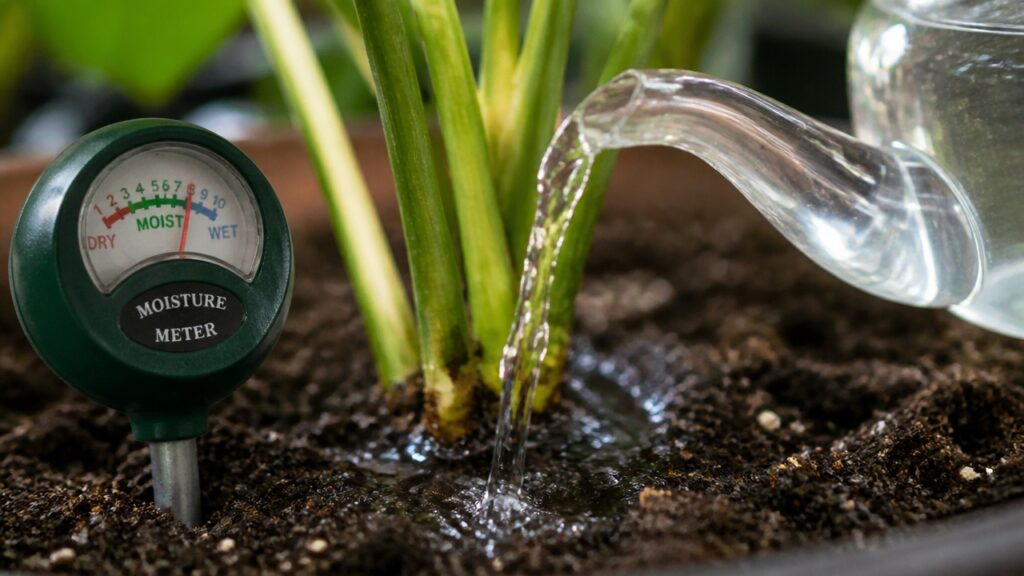
The finger test solves this beautifully, letting you check soil moisture a couple of inches down without any tools. A moisture meter offers another reliable option if you prefer something more precise and want to remove all doubt from the equation.
Overwatered plants show different signs than underwatered ones, and learning to spot the difference matters. Soggy roots and yellowing leaves signal too much water, while crispy, brown leaf edges and stunted growth point to thirst.
Once you recognize these patterns, you’ll stop second-guessing yourself and start responding to what your plant actually needs. The real shift happens when you move from routine watering to actually observing your plants.
Check the soil before watering, adjust based on the season, and notice how your specific space affects moisture levels. Your plants will thank you with healthier growth and fewer dramatic ups and downs.
Check Soil Moisture Correctly Before Watering
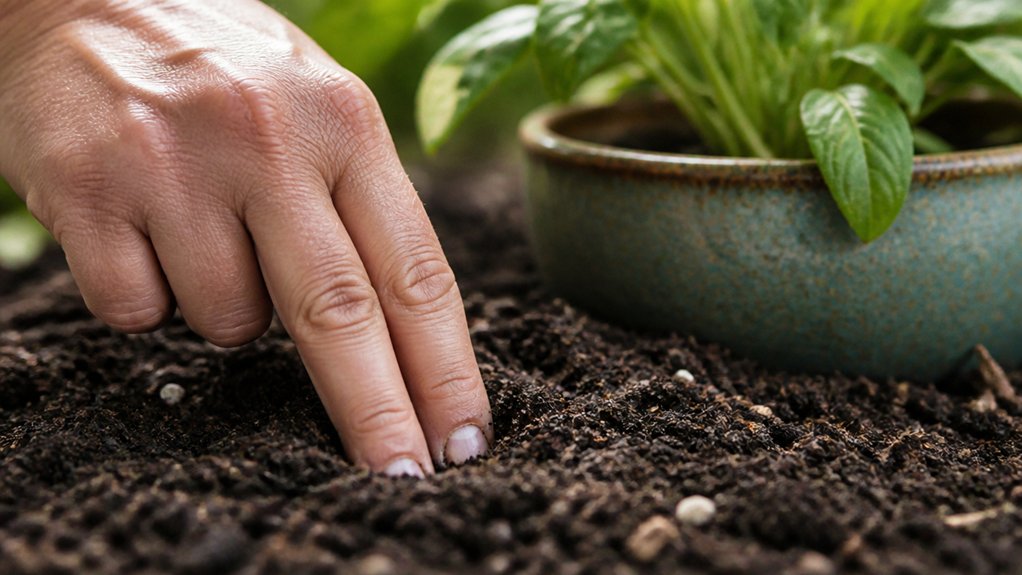
Proper assessment of soil moisture prevents both overwatering and underwatering, the two most common plant care mistakes. Gardeners can check soil moisture using several methods. The finger test involves inserting one or two fingers into soil near the plant’s base, approximately one to two inches deep. If soil feels dry at this depth, watering is needed.
If soil feels moist or wet, the plant requires no additional water. Moisture meters offer another option, providing numerical readings of soil water content. These devices work well for potted plants and container gardens. Weight assessment also works; heavier pots indicate adequate moisture, while lighter pots suggest dryness.
Different plants require different moisture levels, so checking before watering guarantees appropriate hydration without causing root damage or nutrient leaching.
How Often Should You Water? (The Answer Depends on This)
How frequently plants need water depends on several interconnected factors rather than a fixed schedule. Plant type matters greatly, since succulents require less water than ferns or tropical varieties. Pot size and material affect drainage rates, with clay pots drying faster than plastic ones. Soil composition influences water retention, where sandy soil drains quickly while clay soil holds moisture longer.
Environmental conditions including temperature, humidity, and light exposure determine evaporation speed. During summer, most plants need watering two to three times weekly, whereas winter typically requires once weekly or less. Indoor plants generally need less frequent watering than outdoor specimens.
Rather than relying on calendar dates, gardeners should check soil moisture before each watering to verify accuracy and prevent overwatering.
Is Your Plant Drowning or Dying of Thirst? How to Tell
Knowing when to water plants is only half the battle; identifying whether a plant suffers from too much water or too little determines the next course of action. Overwatered plants display yellow leaves, soft stems, and a musty soil smell, indicating root rot. Underwatered plants show crispy, brown leaf edges, wilting despite moist soil appearance, and leaves that drop easily.
The soil itself provides clues: soggy, compacted soil suggests overwatering, while hard, cracked soil indicates underwatering. Check moisture by inserting a finger two inches into the soil. Wet soil signals excess water; bone-dry soil signals insufficient water.
Different plants require different conditions, so observing individual plant responses helps gardeners adjust watering schedules accordingly and prevent future problems.
Match Your Watering Schedule to Plant Type
Why do some plants need water every few days while others thrive on weekly or monthly watering? Different plant types have varying moisture requirements based on their natural habitats.
Tropical plants like philodendrons and ferns prefer consistently moist soil, requiring water every few days. Succulents such as aloe and jade plants store water in their leaves, needing water only every two to three weeks. Cacti require even less, typically watering once monthly during growing season.
Flowering plants like orchids need moderate watering, roughly once weekly. Herbs such as basil and mint prefer evenly moist conditions, requiring water every two to three days. Houseplants with thick leaves generally need less frequent watering than thin-leaved varieties.
Matching watering frequency to plant type prevents both overwatering and underwatering, ensuring ideal plant health.
Moisture Meters and Watering Tools That Work
Several tools help gardeners determine when plants need water, eliminating guesswork and preventing common watering mistakes. Moisture meters measure soil water content by inserting a probe into the earth, providing numerical readings that indicate whether soil is dry, moist, or wet. Digital versions offer precise measurements, while analog models work without batteries.
Watering cans with narrow spouts direct water to plant bases, reducing leaf wetness and water waste. Soaker hoses deliver water slowly to soil, minimizing runoff. Drip irrigation systems automate watering by releasing measured amounts directly to roots.
Moisture meters typically cost between ten and thirty dollars. Soaker hoses range from fifteen to fifty dollars depending on length. These tools improve watering accuracy by providing concrete data rather than relying on visual inspection or finger testing alone.
Frequently Asked Questions
Can I Use Tap Water Directly From the Faucet, or Should I Let It Sit First?
Tap water can be used directly for most plants. However, letting it sit for 24 hours allows chlorine to dissipate, which benefits sensitive species. This simple practice improves water quality and promotes healthier plant growth overall.
What’s the Best Time of Day to Water My Plants for Optimal Health?
Like ancient gardeners following the sun’s rhythm, modern plant enthusiasts should water early morning or late evening. These cooler hours minimize evaporation, allowing roots maximum absorption while reducing heat stress on foliage.
How Do I Water Plants While Traveling or Away From Home for Weeks?
One can employ self-watering stakes, drip irrigation systems, or water globes that gradually release moisture. Alternatively, having a trusted friend water plants weekly or relocating them to shadier locations reduces evaporation needs during extended absences.
Does Water Temperature Matter When Watering Indoor Versus Outdoor Plants?
While one might assume temperature matters little, it actually does. Cold water can shock sensitive indoor plants’ roots, while outdoor plants tolerate it better. Room-temperature water proves ideal for houseplants; outdoor varieties adapt to cooler conditions.
Should I Water From the Top or Bottom of the Plant Pot?
Bottom watering proves superior for most houseplants. This method allows roots to absorb moisture gradually while preventing water from pooling on leaves, which causes fungal issues. Top watering works for established plants with sturdy foliage.
Conclusion
Mastering plant watering requires abandoning all guesswork entirely. Gardeners must check soil moisture obsessively, observe plant symptoms religiously, and match watering schedules precisely to each species. Moisture meters and drip irrigation systems eliminate uncertainty almost completely. By implementing these methods consistently, plant owners transform themselves into botanists who deliver exact water amounts. This systematic approach prevents catastrophic overwatering and underwatering, ensuring plants thrive spectacularly.