
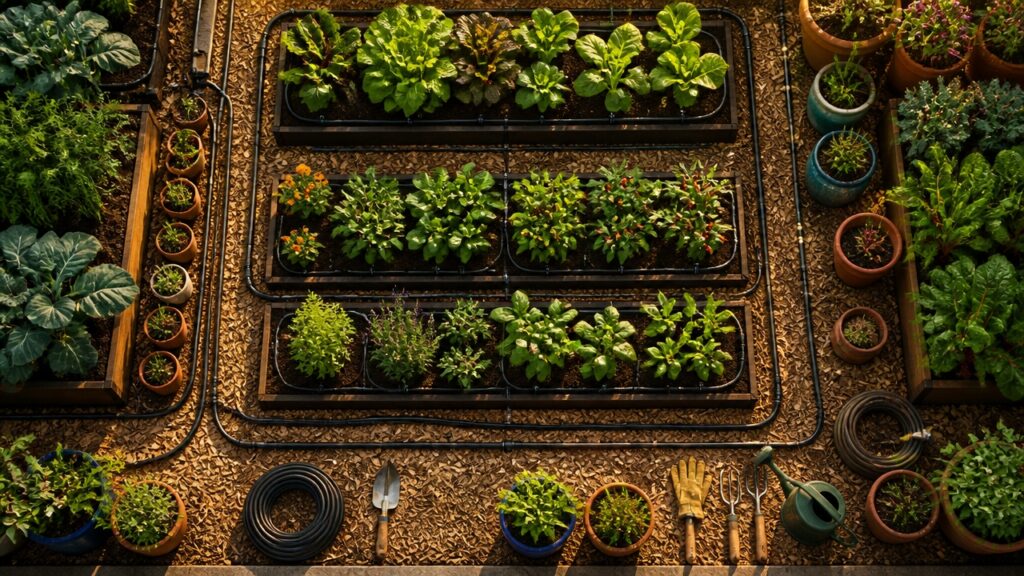
Imagine stepping into your garden on a hot summer day and watching water reach exactly where it needs to go.
Planning an irrigation layout starts with mapping out what you actually have: raised beds, borders, flowering areas, and scattered pots. Each zone has its own personality and thirst level.
Raised vegetable beds drink differently than flower borders do. Drip irrigation works beautifully for vegetables since water seeps slowly right at the soil level, while soaker hoses suit borders perfectly by releasing moisture along their length.
Container plants, though, need their own solution because pots dry out faster and can’t share a single line.
The tricky part comes when you factor in what your garden actually looks like. Sun exposure determines evaporation rates, your soil type affects how quickly water drains away, and different plants obviously want different amounts of moisture.
A shaded corner with clay soil behaves nothing like a sunny spot with sandy ground.
Getting this right means creating a system that waters efficiently but stays easy for you to manage and adjust.
Before you start digging or laying hoses, spend time observing your garden through a full week of weather. Notice which spots dry fastest and where water tends to pool.
That real-world knowledge turns a good plan into a system that actually works.
Map Your Garden Layout and Irrigation Needs
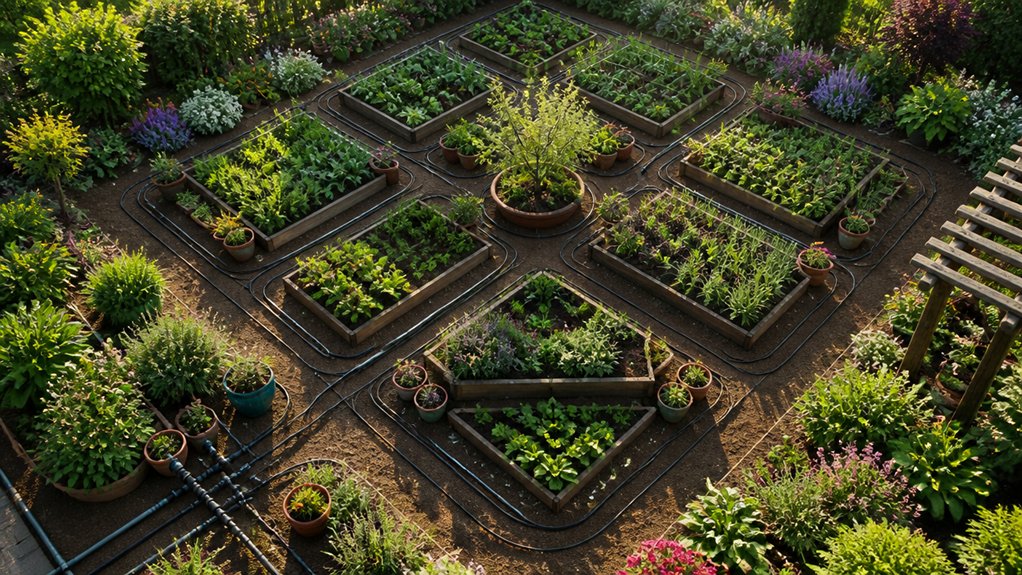
Before installing any irrigation system, gardeners must document their garden’s physical features and water requirements.
Begin by sketching the garden layout on paper, marking the locations of beds, borders, pots, and existing structures. Note the dimensions of each area, including length, width, and spacing between plants.
Identify sun exposure patterns, as full-sun beds require more water than shaded zones. Document soil type and drainage characteristics, since sandy soil needs frequent watering while clay soil retains moisture longer.
List plant types and their water needs. Vegetables typically require consistent moisture, whereas established shrubs need less frequent watering. Container plants demand daily attention during hot periods.
Record water source locations, including outdoor faucets and hose connections. Measure distances from the water source to each garden section. This information guides pipe routing and system design decisions.
Choose the Right Irrigation Method for Each Zone
What irrigation method works best depends on garden layout, plant types, and water source location. Drip irrigation suits raised beds and borders, delivering water directly to soil, reducing waste. Soaker hoses work well for vegetable patches, covering linear areas efficiently. Sprinklers benefit lawns and wide garden sections, distributing water evenly overhead.
Container plants need drip lines or hand watering, since pots drain quickly. Micro-sprinklers serve ornamental beds with mixed plantings, adjusting coverage as needed. Drip systems require timers and filters for peak performance.
Hand watering remains practical for small gardens, potted plants, and newly planted areas requiring careful attention. Selecting methods based on specific zones guarantees efficient water use, healthier plants, and reduced maintenance demands throughout the growing season.
Size and Position Your Main Water Line and Source
The foundation of any irrigation system rests on proper water line sizing and source placement. Homeowners should locate the water source, typically a spigot or main line, near the garden’s center or highest point to minimize pressure loss.
The main water line diameter affects flow rate and coverage efficiency. Half-inch lines suit small gardens, while three-quarter-inch lines handle larger layouts with multiple zones. Positioning the source strategically reduces the distance water travels through pipes, lowering energy costs and preventing inadequate pressure at distant zones.
Burying main lines eighteen inches deep protects them from freezing and damage. Above-ground lines work for temporary systems. Calculating total water needs and peak demand guarantees the selected source provides sufficient volume for all irrigation methods operating simultaneously.
Install Drip Lines in Your Vegetable Beds
Drip irrigation delivers water directly to plant roots through a network of tubing and emitters, reducing waste and improving vegetable yields. Gardeners can use soaker hoses or drip lines with spaced emitters to water tomatoes, peppers, lettuce, and beans effectively. The tubing should lay along soil surfaces, positioned near plant bases, delivering water slowly and consistently.
Emitters typically space 12 to 24 inches apart, depending on plant needs and soil type. Clay soils retain moisture longer, requiring less frequent watering than sandy soils. Drip systems connect to the main water line through a timer and filter setup. This method reduces water consumption by 50 percent compared to overhead sprinklers, while minimizing leaf diseases caused by wet foliage.
Set Up Soaker Hoses and Sprinklers for Borders
Soaker hoses and sprinklers serve different purposes when irrigating garden borders, flower beds, and ornamental plantings. Soaker hoses work best for linear borders, delivering water directly to soil at low pressure, reducing waste. Sprinklers suit wider border areas, distributing water in patterns across multiple plants.
When selecting equipment, consider border width and plant density. Narrow borders benefit from single soaker hoses laid along planting lines. Wider borders may require multiple hoses or oscillating sprinklers. Oscillating sprinklers cover rectangular areas effectively, while impact sprinklers handle larger, irregular spaces.
Connect hoses to main supply lines using connectors and timers for consistent watering. Position soaker hoses at soil level, burying them partially under mulch for efficiency. Adjust sprinkler spray patterns to avoid pavement and hardscaping.
Create a Watering System for Container Gardens
Container gardens require different watering approaches than in-ground beds, since pots dry out faster and need more frequent irrigation. Drip irrigation systems work well for containers, delivering water directly to soil through small tubing and emitters. Soaker hoses can be coiled around container edges, providing consistent moisture without waste. Micro-sprinklers suit larger container groupings, distributing water evenly across multiple pots simultaneously.
Container gardens benefit from automated timers, which guarantee regular watering during hot weather or when gardeners travel. Drip lines with adjustable flow rates accommodate different pot sizes and plant types effectively.
Drainage holes remain essential, preventing water from pooling and causing root rot. Clay pots dry faster than plastic containers, requiring more frequent watering schedules. Mulch application reduces evaporation rates, extending intervals between watering sessions.
Design Your Irrigation Control Zones and Valves
Since water needs vary across different garden areas, dividing the irrigation system into separate control zones allows gardeners to water plants efficiently based on their specific requirements.
Each zone operates independently through dedicated valves, enabling customized watering schedules. Container plants typically need daily watering, while perennial beds require less frequent irrigation. Soaker hose zones suit vegetable gardens, whereas drip lines work well for shrub borders.
Gardeners should group plants with similar water demands into single zones. For example, shade-tolerant hostas can share a zone separate from sun-loving lavender.
Installing a timer-controlled manifold with multiple outlet ports manages different zones automatically. The number of zones depends on garden size and plant variety. Smaller gardens may need two to three zones, while larger landscapes require five or more. Proper zone design reduces water waste and prevents overwatering or underwatering specific areas.
Install and Test Your Complete Irrigation System
After establishing zones and selecting appropriate delivery methods, the actual installation of the irrigation system begins. Installers lay out tubing, drip lines, and sprinkler heads according to the prepared layout plan. Each zone receives its designated valve, allowing independent control of different garden areas.
Once physical installation concludes, the system requires thorough testing. Technicians activate each zone separately, checking for proper water coverage, adequate pressure, and leaks at connection points. Adjustments to emitter placement or sprinkler angles guarantee even water distribution across beds, borders, and containers. Flow rates are verified to match plant requirements.
Testing typically takes several hours and may occur over multiple days to observe performance under various conditions. Proper installation and testing prevent water waste and promote healthy plant growth throughout the garden.
Frequently Asked Questions
How Much Water Should Different Plants Receive Daily or Weekly?
Plants typically require 1-2 inches of water weekly, though needs vary considerably. Vegetables demand consistent moisture, leafy greens need 1 inch weekly, while succulents require minimal water. Established trees need deep watering every 7-10 days. Container plants require more frequent watering than in-ground varieties.
What Is the Best Time of Day to Water Garden Plants?
Early morning watering proves most beneficial for garden plants. It allows moisture absorption before heat increases evaporation, reduces fungal disease risk by letting foliage dry quickly, and helps plants withstand daytime stress. Evening watering should be avoided as it promotes rot and disease development.
How Can I Winterize My Irrigation System in Cold Climates?
Like a bear preparing for hibernation, gardeners must drain all water from lines and shut off the main valve before freezing temperatures arrive. Disconnect hoses, blow out remaining moisture with compressed air, and store components indoors to prevent frost damage.
Which Plants Are Drought-Tolerant and Need Minimal Irrigation?
Sedums, lavender, ornamental grasses, Russian sage, and coneflowers thrive with minimal water. Succulents like agave and aloe excel in dry conditions. Native plants adapted to local climates also demonstrate excellent drought resistance and reduced irrigation demands.
How Do I Fix Leaks or Broken Irrigation Lines Quickly?
Like patching a ship’s hull, one locates the breach by observing water loss, then applies waterproof tape or coupling connectors. For serious damage, one replaces the compromised section entirely, ensuring all connections are tightened securely before resuming operation.
Conclusion
A well-designed irrigation system reduces water usage by up to 50% compared to manual watering methods. Gardeners who implement zone-based control, drip lines, and soaker hoses achieve consistent plant hydration while conserving resources. Proper system installation, testing, and maintenance guarantee long-term efficiency. Strategic planning of water delivery methods for beds, borders, and containers creates a sustainable garden that supports healthy plant growth with minimal waste.