
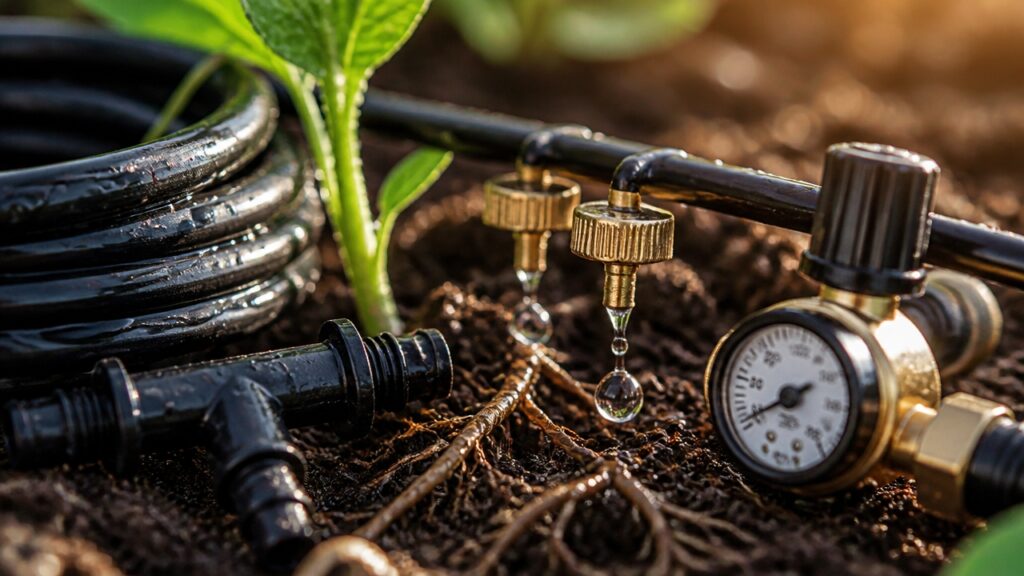
Imagine watching water pool on the ground while your plants struggle to absorb what they need. Drip irrigation systems solve this problem by delivering water directly to plant roots, cutting consumption by 30-50% compared to sprinklers or hand watering. The efficiency gains alone make many homeowners curious about making the switch.
These systems rely on five essential pieces working together: a water source, filter, pressure regulator, mainline tubing, and emitters. Once installed, water flows steadily through the lines straight to where plants actually need it. This targeted approach means less waste and healthier plants overall.
Getting started typically costs between $500 and $2,500, depending on your property size and setup complexity. The good news is that most people see annual water bill savings of $50-$100, which helps offset the initial investment over time.
For properties with gardens, landscaping, or vegetable beds, the numbers often make financial sense.
Keeping a drip system running smoothly doesn’t require much effort. Regular filter checks, occasional line inspections, and basic maintenance keep everything functioning properly for years.
Whether you’re trying to cut water waste or simply tired of manual watering, understanding these systems helps you decide if one fits your needs.
What You Need: The 5 Core Parts of Every Drip System
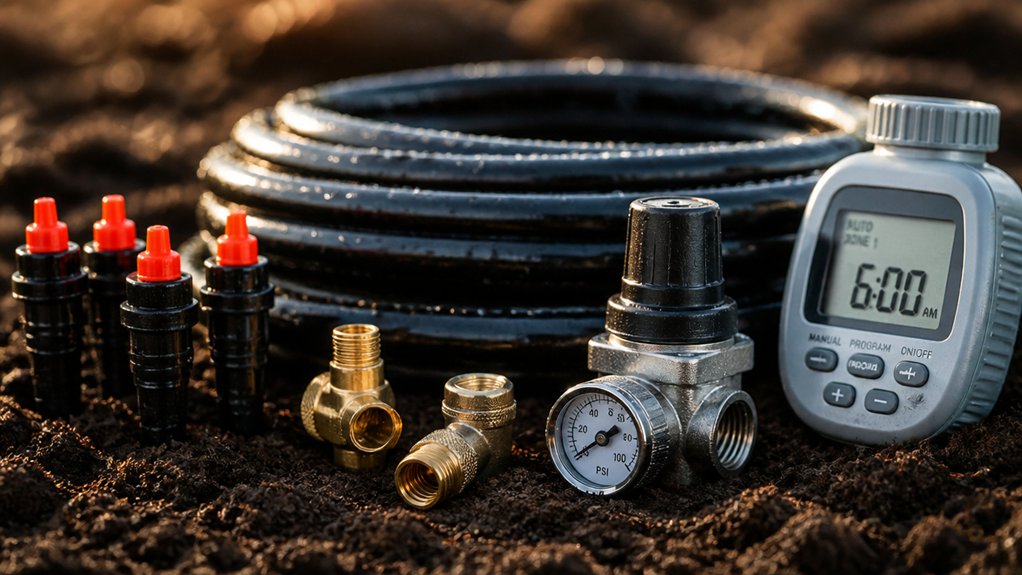
Every drip irrigation system relies on five essential components working together to deliver water directly to plant roots. First, a water source provides the supply, whether from a well, tank, or municipal line. Second, a filter removes debris and sediment that could clog the system. Third, a pressure regulator maintains consistent water pressure throughout the network. Fourth, the mainline tubing transports water from the source to garden beds.
Fifth, drip lines or emitters deliver water slowly at soil level, reducing waste. These components function as an integrated unit. The filter prevents damage, the regulator guarantees uniform water distribution, and the emitters control flow rate. Together, they create an efficient system that waters plants while conserving water resources.
How Drip Systems Work
Water flows through drip irrigation in a straightforward sequence, moving from the source through each component in order. The water supply, typically from a well or municipal line, enters the main line first. A filter then removes debris, preventing clogs in smaller tubing. The pressure regulator reduces water force to appropriate levels, usually 20-30 PSI for drip systems.
Water then travels through lateral lines, which branch out across garden beds or rows. Emitters or drip lines release water slowly at soil level, delivering moisture directly to plant roots. This design minimizes evaporation and runoff.
Timers automate the process, turning water on and off at scheduled intervals. The entire system operates passively once installed, requiring minimal maintenance beyond occasional filter cleaning and seasonal adjustments.
Installation Costs (What to Budget)
Most homeowners spend between $500 and $2,500 to install a drip irrigation system, depending on garden size, complexity, and material choices. Small residential gardens typically cost $500 to $1,000, while larger properties or complex layouts reach $2,000 to $2,500.
Material expenses include tubing, drippers, filters, timers, and connectors. Premium components cost more than basic options. Labor costs vary by region and installer experience.
DIY installation reduces expenses considerably but requires time and knowledge. Hiring professionals guarantees proper design and setup. Additional factors affecting price include soil type, water source distance, and existing landscape features.
Homeowners should obtain multiple quotes before committing, comparing materials and service offerings carefully.
How Much Water and Money You’ll Actually Save
The upfront investment in a drip irrigation system typically pays for itself through water and utility savings within one to three years. Homeowners using drip systems reduce water consumption by 30 to 50 percent compared to traditional sprinklers. A typical household saves approximately 15,000 gallons annually, translating to $50 to $100 per year on water bills depending on local rates.
Reduced water usage lowers sewage charges in some municipalities. Energy costs also decrease since drip systems require minimal pressure. Landscapers report maintenance savings from fewer weeds and healthier plants needing less replacement. Tax incentives and rebates available in certain regions further offset initial expenses.
Long-term financial benefits combine lower utility bills, reduced labor costs, and extended plant lifespan, making drip systems economically practical investments for most properties.
Installation: Getting Your Drip System Running in a Weekend
A drip system’s installation process requires minimal tools, basic planning, and approximately one to two days of work. Homeowners need a shovel, utility knife, connectors, and tubing to begin setup. First, they map out garden beds, marking water source locations and plant spacing.
Next, they lay main supply lines along garden edges, then branch smaller tubes to individual plants. Securing tubing with stakes or clips prevents movement. Common mistakes include improper slope, which causes water pooling, and oversized tubing diameter, which reduces pressure.
Testing the system before burying lines identifies leaks early. Most installations cost between fifty and three hundred dollars, depending on garden size and complexity.
Troubleshooting Common Drip Irrigation Problems
Once homeowners complete their drip system installation and test it for leaks, problems can still emerge over time through regular use. Common issues include clogged emitters, which restrict water flow and reduce plant hydration. Mineral deposits and debris frequently cause these blockages in arid regions.
Low water pressure may indicate kinked tubing or a malfunctioning filter, requiring inspection and adjustment. Uneven watering patterns suggest misaligned drip lines or damaged sections needing repositioning or replacement. Leaks at connection points occur when fittings loosen or deteriorate.
Regular maintenance prevents most problems: flush the system monthly, check filters quarterly, and inspect tubing for cracks or damage. Seasonal storage protects components from freezing temperatures and UV exposure in winter months.
Frequently Asked Questions
Can I Use a Drip Irrigation System for Indoor Potted Plants?
Yes, drip irrigation systems work well for indoor potted plants. They deliver water directly to soil, reducing waste and maintaining consistent moisture levels. Smaller, compact systems designed for containers are readily available and easy to install in homes or greenhouses.
What’s the Best Season to Install a Drip Irrigation System?
Ironically, the worst time to install a drip system is summer, when one desperately needs it most. Fall and spring prove ideal, offering mild temperatures and ample time before peak growing seasons demand reliable watering.
Are Drip Systems Compatible With Smart Home Automation Technology?
Yes, modern drip irrigation systems are increasingly compatible with smart home automation. Many manufacturers offer WiFi-enabled controllers that integrate with popular platforms, allowing users to schedule watering remotely and monitor system performance through smartphone applications.
How Long Does a Typical Drip Irrigation System Last Before Replacement?
A typical drip irrigation system lasts 8 to 10 years with proper maintenance. However, individual components like drip lines and emitters may require replacement every 3 to 5 years due to wear, clogging, or UV degradation.
Can Drip Irrigation Systems Work on Sloped or Uneven Terrain?
Like water finding its way downhill, drip irrigation systems expertly adapt to sloped terrain. Yes, they function effectively on uneven ground through pressure regulators and strategic emitter placement, though installation requires careful planning to guarantee uniform water distribution across elevation changes.
Conclusion
Drip irrigation systems function like a direct pipeline to plant health, delivering water precisely where needed while reducing waste. Homeowners investing $500-$2,500 upfront can expect annual savings of $50-$100 on water bills, coupled with healthier vegetation. Success requires understanding core components, managing installation, and performing routine maintenance. These systems offer measurable returns through lower utility costs and improved plant performance, making them a practical long-term investment for efficient landscape management.