
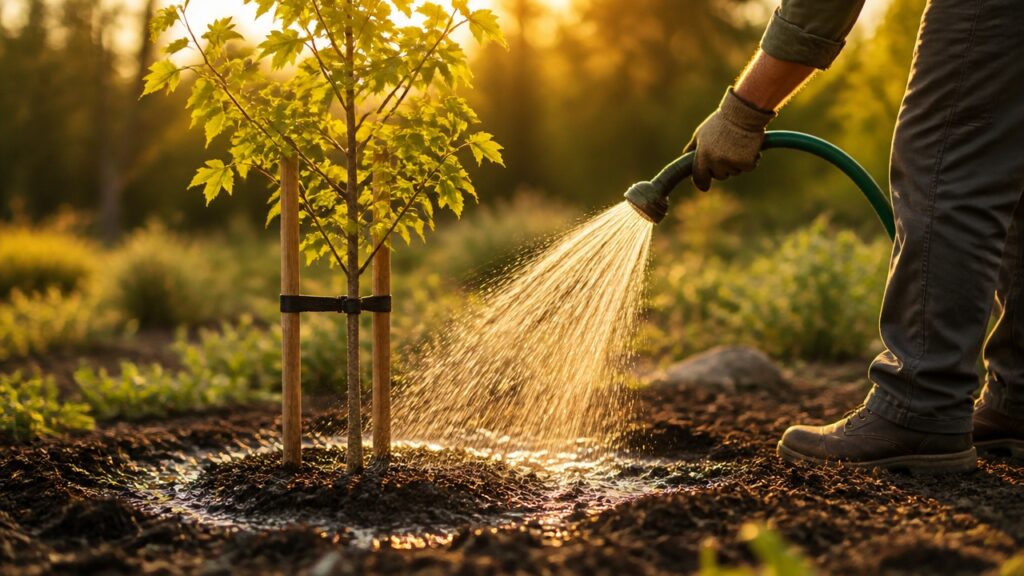
When you plant a new tree, those first couple of years feel like a delicate balance. You’re watering regularly, watching the soil, and hoping everything takes root properly. The truth is that newly planted trees need consistent moisture to build strong root systems, and getting this right makes all the difference between a thriving tree and one that struggles.
Water needs shift quite a bit depending on what you’re working with. Your soil type matters, the size of the tree matters, and even the weather throws its own curveballs into the mix.
During that first year, you’ll find yourself watering more frequently to keep up with the tree’s demands as it settles in.
By year two, things ease up a little. The roots have started pushing deeper into the soil, which means the tree becomes less dependent on your constant attention.
You can gradually reduce how often you water, though you’ll still need to stay attentive during dry spells.
Spotting problems early saves a lot of frustration. Drooping leaves or wilting might signal underwatering, while soggy soil and fungal issues point to too much moisture.
Paying attention to these signs and adjusting your watering habits accordingly is what transforms a newly planted tree into one with real staying power.
What Soil Type Is Your Tree Planted In?
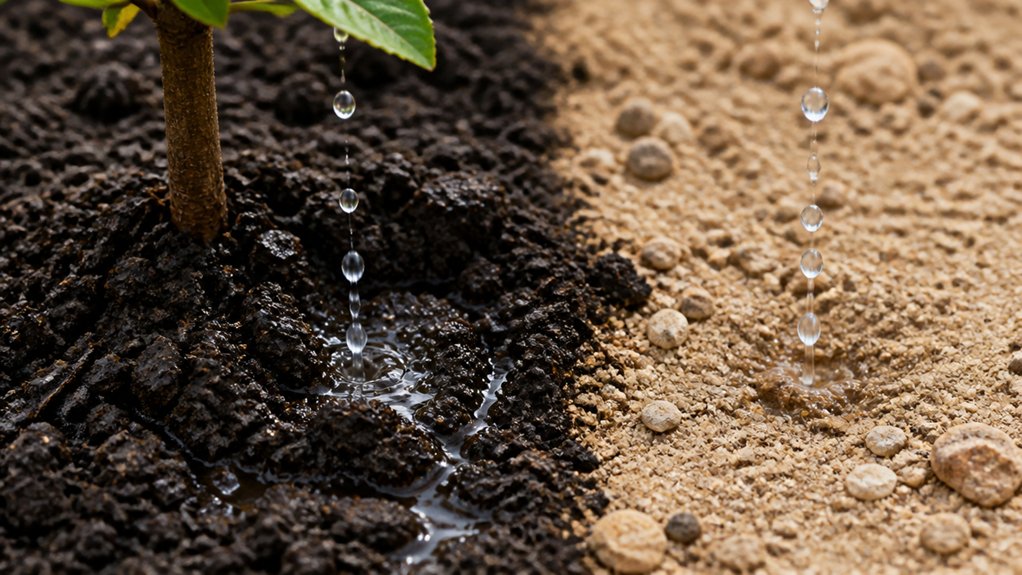
Why does soil type matter for newly planted trees? The soil composition directly affects water retention, drainage, and nutrient availability, which influence a tree’s establishment success.
Sandy soil drains quickly, often too quickly, leaving trees without sufficient moisture during dry periods. Clay soil retains water well but may become waterlogged, restricting oxygen to roots. Loamy soil, containing sand, clay, and organic matter, provides the ideal balance for most trees.
Identifying your soil type helps determine watering frequency and volume. Sandy soils require more frequent watering. Clay soils need less frequent applications but longer intervals between waterings to prevent oversaturation.
Loamy soils typically require moderate, consistent moisture.
Testing soil composition through local extension services provides specific information about your planting area, enabling more precise watering decisions for newly planted trees.
How Much Water Does a Newly Planted Tree Need?
How much water should be applied at each watering session? A newly planted tree typically requires one to two gallons of water per inch of trunk diameter at each session. For example, a tree with a two-inch diameter trunk needs two to four gallons.
Water frequency depends on soil type and climate conditions. Sandy soils drain quickly and need more frequent watering, sometimes every two to three days. Clay soils retain moisture longer, requiring watering every five to seven days. Loamy soils fall between these extremes.
During the first year, trees need consistent moisture without waterlogging. Applying water slowly allows soil absorption and reduces runoff. Mulch helps retain soil moisture, reducing overall watering needs. Check soil moisture before each watering by pressing a finger two inches deep into the ground.
How Often Should You Water in Year One vs. Year Two?
The watering schedule for a newly planted tree changes markedly between its first and second years of growth. During year one, trees require consistent moisture as their root systems establish themselves in the surrounding soil. Watering two to three times weekly proves necessary, depending on rainfall and local climate conditions.
Year two demands less frequent watering, typically once or twice weekly, since the tree’s roots have expanded and can access deeper soil moisture more effectively. By the second year, the tree becomes increasingly self-sufficient during normal precipitation periods.
Gardeners should monitor soil moisture at four to six inches deep, adjusting frequency based on weather patterns, soil type, and tree species. Reducing reliance on supplemental watering gradually helps develop stronger, deeper root systems capable of supporting long-term tree health.
How Should Rainfall and Seasonality Change Your Schedule?
Rainfall patterns and seasonal changes substantially alter how often a newly planted tree needs supplemental watering. During wet seasons, natural precipitation may provide sufficient moisture, allowing gardeners to reduce or pause scheduled watering. Trees receive less water during drought periods, requiring more frequent irrigation to maintain soil moisture.
Spring and fall typically bring moderate rainfall, reducing watering needs compared to summer months. Winter dormancy slows water requirements considerably, though some regions need occasional watering during dry winters.
Gardeners should monitor soil conditions regularly rather than following fixed schedules year-round. Adjusting watering frequency based on recent rainfall, temperature fluctuations, and seasonal patterns prevents both overwatering and underwatering. This adaptive approach supports healthy root establishment while conserving water resources.
Is Your Tree Underwatered or Overwatered?
Identifying whether a newly planted tree receives too much or too little water requires careful observation of visible symptoms and soil conditions. Underwatered trees display wilting leaves, yellowing foliage, and dry, cracked soil around the base. Overwatered trees show yellowing leaves, soft bark, fungal growth, and consistently soggy soil that remains wet days after rainfall.
The soil should feel moist at two to three inches deep, not waterlogged or bone-dry. Check soil moisture by inserting a finger into the ground near the tree’s root ball. Remove excess water from the surface if standing water appears. Adjust watering frequency based on these observations, reducing water for overwatered trees and increasing frequency for underwatered specimens.
How to Deep Water for Stronger Roots
Deep watering encourages newly planted trees to develop strong, extensive root systems that reach further into the soil. This method involves applying water slowly and deeply, allowing moisture to penetrate several inches below the surface.
Effective deep watering techniques include using soaker hoses placed at the tree’s base for extended periods, applying water until the soil is moist 8-12 inches down, and watering less frequently but more thoroughly than shallow watering.
Trees like oaks and maples benefit greatly from deep watering practices. The process trains roots to grow downward, seeking moisture rather than spreading near the surface. This deeper root development improves stability and drought resistance as trees mature.
Checking soil moisture at various depths confirms adequate water penetration. Gardeners should adjust frequency based on rainfall, soil type, and seasonal conditions to maintain consistent moisture without waterlogging.
Should You Mulch Your Newly Planted Tree?
While deep watering establishes a strong root foundation, mulch serves a complementary role in protecting and supporting newly planted trees. A 2-4 inch layer of organic mulch, such as wood chips or shredded bark, moderates soil temperature and retains moisture around the root zone. This reduces stress on young trees during dry periods and minimizes watering frequency.
Mulch also suppresses competing weeds, which compete for water and nutrients. Keep mulch several inches away from the tree trunk to prevent rot and disease. Avoid volcano-shaped mulch piles against the base, as this traps moisture and invites pest damage.
Apply mulch within the tree’s drip line, extending outward. Replenish mulch annually as it decomposes, maintaining consistent depth throughout the establishment period.
Do Different Tree Species Have Different Watering Needs?
How much water a newly planted tree requires depends largely on its species, since different trees evolved in different climates and soil conditions. Deciduous trees like maples and oaks tolerate moderate moisture levels, while evergreens such as pines and spruces prefer drier soil once established.
Fruit trees including apples and cherries need consistent watering during their first year. Desert-adapted species like mesquite and acacia require considerably less water than trees from wetter regions. Tropical trees, conversely, demand frequent watering and higher humidity.
Understanding a tree’s native habitat guides appropriate watering schedules. Local nurseries can identify which species grow in your area and recommend specific moisture requirements. Consulting regional forestry extension services provides species-specific guidance tailored to local growing conditions.
What Are the Most Common Watering Mistakes?
What Are the Most Common Watering Mistakes?
Even when gardeners know their tree’s species and native habitat, they often apply water incorrectly, undermining their efforts to establish healthy plants. Common mistakes include watering too frequently, which creates soggy soil and promotes root rot. Shallow, daily watering encourages weak surface roots rather than deep root development. Conversely, infrequent watering leaves trees drought-stressed and vulnerable to disease.
Timing errors also occur frequently. Watering during midday heat causes excessive evaporation, wasting resources. Evening watering can promote fungal issues on foliage. Additionally, many gardeners fail to water the entire root ball area, focusing only on the soil surface.
Inconsistent watering patterns, alternating between wet and dry conditions, stress newly planted trees considerably. Proper technique requires deep, thorough watering at appropriate intervals based on soil moisture, not rigid schedules.
Frequently Asked Questions
What Time of Day Is Best for Watering Newly Planted Trees?
Early morning is ideal for watering newly planted trees. This timing allows moisture to penetrate soil deeply before evaporation occurs during heat. Early watering also enables foliage to dry quickly, reducing fungal disease risk and ensuring trees absorb maximum hydration.
Can I Use Recycled or Treated Water on My Newly Planted Tree?
Studies show that approximately 30% of newly planted trees fail due to improper watering practices. Recycled water is generally acceptable for newly planted trees, though treated water with high salt or chlorine content should be avoided, as these chemicals can damage developing root systems.
How Long Should I Continue This Watering Schedule After Two Years?
After two years, trees typically require less frequent watering as their root systems establish deeper into the soil. Most mature trees need supplemental watering only during extended drought periods, reducing dependence on regular irrigation schedules.
What Equipment or Tools Work Best for Watering Newly Planted Trees?
Apparently, one’s bare hands suffice perfectly—assuming gardeners enjoy perpetual mud-caking. Realistically, soaker hoses deliver water efficiently to root zones, while drip irrigation systems offer precise control. Tree watering bags and burlap soakers prove equally effective for consistent, deep hydration.
Should I Water Newly Planted Trees Differently in Containers Versus Ground?
Container trees require more frequent watering since soil dries faster in limited space. Ground-planted trees need deeper, less frequent watering to encourage root establishment. Container trees benefit from daily checks, while ground trees typically need watering twice weekly.
Conclusion
Newly planted trees require consistent watering during their first two years, functioning like seedlings building invisible foundations. The roots, though hidden underground, determine whether the tree flourishes or withers. By adjusting water frequency and volume based on soil type, season, and rainfall, gardeners fundamentally sculpt the tree’s future stability. Proper watering transforms vulnerable saplings into resilient specimens capable of thriving for decades.