
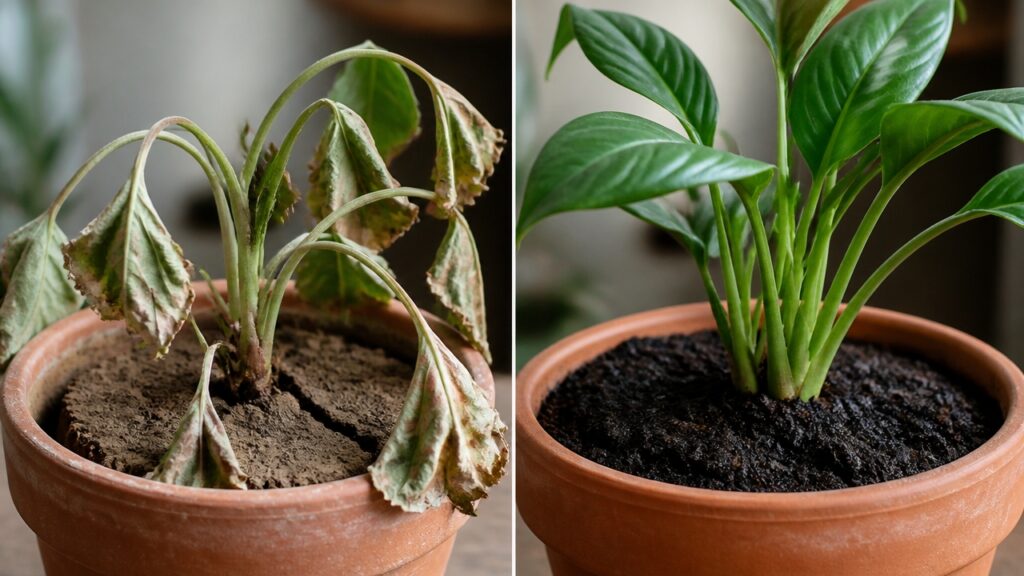
When you notice your plant’s leaves turning brown at the edges, that’s usually your first real clue that something’s off. Underwatered plants show clear warning signs: soil that pulls away from the pot edges, crispy leaf tips, drooping stems, and noticeably slower growth.
These symptoms develop because the plant isn’t getting the water it needs to function properly. The stress of underwatering affects the whole plant, but here’s what’s encouraging: recovery can happen surprisingly fast.
With the right approach, especially using bottom-watering methods where you let the pot sit in water and absorb from below, many plants bounce back within just a few days. Some recover almost immediately, while others take a bit longer depending on the species.
What’s actually more important than rushing to fix the problem is understanding why it happened in the first place. Maybe your watering schedule doesn’t match the season, or perhaps you underestimated how much water your particular plant needs.
Once you know what caused the underwatering, preventing it next time becomes much easier. Getting your plant back on track doesn’t require special skills or fancy equipment.
Consistent, proper watering and a little patience are really all it takes. Most plants are pretty forgiving if you catch the problem early and adjust your care routine accordingly.
Spot the Signs Your Plant Is Underwatered
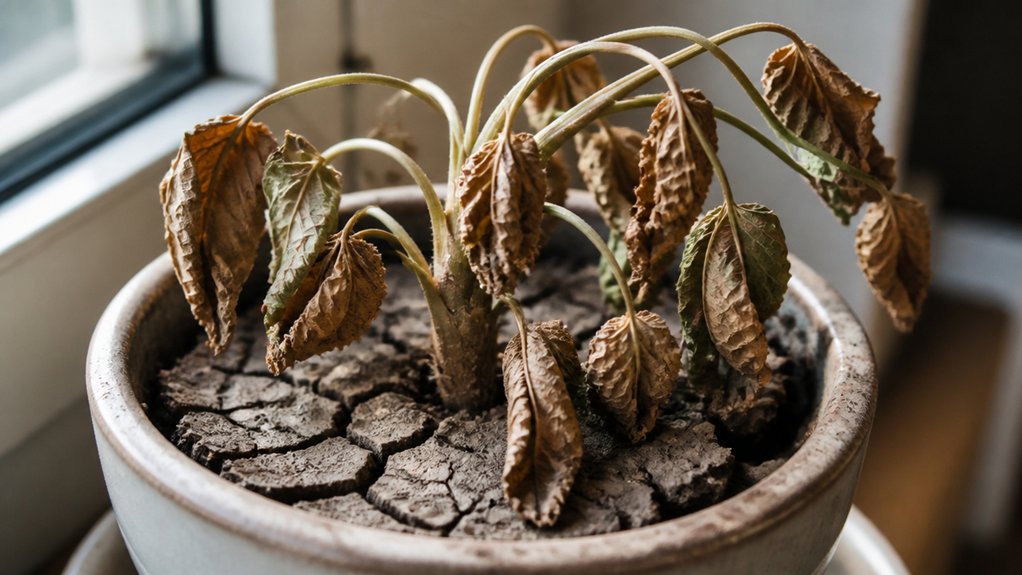
When a plant does not receive enough water, it displays several recognizable symptoms. The soil becomes dry and pulls away from the pot’s edges, making watering difficult. Leaves turn brown at the tips and edges, then yellow throughout, eventually dropping from the plant entirely.
The foliage wilts noticeably, appearing droopy and lacking firmness, even when the air is cool. Growth slows considerably, with new leaves emerging smaller than normal. The plant may stop flowering or producing new stems altogether.
Stems become brittle and snap easily when bent. The entire plant feels lightweight when lifted, indicating minimal soil moisture. These signs typically appear within days of insufficient watering, depending on plant type, pot size, and environmental conditions like temperature and humidity levels.
Why Underwatered Plants Wilt and Soil Shrinks
Understanding the mechanics behind wilting and soil shrinkage reveals how plants respond to water deprivation.
When soil lacks moisture, plants cannot absorb water through their roots, causing cell turgor pressure to decrease. This loss of internal water pressure makes stems, leaves, and flowers droop or wilt visibly. The plant’s structural support weakens without adequate hydration.
Simultaneously, underwatered soil physically shrinks and pulls away from pot edges. Dry soil compacts, creating air gaps between the soil and container walls. This separation prevents water from reaching plant roots effectively, even when watering resumes.
Both wilting and soil shrinkage occur together during water deprivation. Recognizing these connected signs helps identify underwatering quickly. Pothos, peace lilies, and snake plants show wilting within hours of insufficient water, making them reliable indicators of drought stress in indoor environments.
Rehydrate in 24 Hours: Here’s Exactly How
Reviving an underwatered plant requires immediate action, starting with the soil rehydration process. Place the pot in a basin filled with room-temperature water, allowing the soil to absorb moisture from below for 10-15 minutes. This bottom-watering method prevents rapid water runoff and guarantees even soil saturation, which is critical for stressed plants.
After soaking, remove the pot and allow excess water to drain completely. The soil should feel consistently moist but not waterlogged. For severely dehydrated plants, repeat this soaking process the following day if the soil dries quickly.
Monitor the plant’s recovery over the next 24 hours. Wilted leaves typically regain firmness within several hours as cells reabsorb water. Keep the plant in indirect light during recovery, reducing transpiration stress during this vulnerable period.
How Fast Do Underwatered Plants Recover?
How quickly does an underwatered plant bounce back? Recovery time depends on several factors, including plant species, severity of dehydration, and environmental conditions.
Most houseplants show improvement within three to seven days of proper watering. Herbs like basil and mint respond faster, often perking up within 24 to 48 hours. Succulents and cacti recover more slowly, requiring one to two weeks.
The extent of damage matters greatly. Plants with slightly wilted leaves recover quicker than those with brown, crispy foliage. Severely damaged leaves may not recover and will drop off naturally.
Environmental factors accelerate recovery. Moderate temperatures, appropriate humidity levels, and indirect light support faster healing. Avoid fertilizing during recovery; stressed plants need time to stabilize before receiving nutrients.
Create a Watering Schedule Your Plants Thrive On
Now that underwatered plants have had time to recover, establishing a consistent watering routine prevents future stress and keeps plants in good condition. Different plants require different amounts of water based on their species, pot size, and environment.
Succulents and cacti need water every two to three weeks, while ferns and peace lilies prefer consistently moist soil. Indoor plants generally require watering once weekly, though this varies by season and humidity levels.
Check soil moisture before watering by inserting a finger one to two inches deep. Water when the soil feels dry at that depth. Outdoor plants may need daily watering during hot weather, while cooler seasons demand less frequent attention.
Adjust the schedule based on rainfall, temperature changes, and plant response to maintain ideal hydration.
Water Needs by Plant Type: A Quick Reference
Different plant species have distinct watering requirements, making a reference guide essential for proper plant care. Succulents and cacti need minimal water, thriving in dry conditions with infrequent watering schedules. Tropical plants like ferns and peace lilies require consistently moist soil and higher humidity levels. Flowering plants, including roses and petunias, prefer moderately moist soil during growing seasons.
Vegetables such as tomatoes and lettuce need regular watering, approximately one to two inches weekly. Houseplants like pothos and snake plants tolerate irregular watering better than others. Indoor herbs require evenly moist soil without waterlogging.
Understanding these distinctions prevents underwatering mistakes. Gardeners should check soil moisture regularly, adjusting frequency based on seasonal changes, container size, and environmental conditions. A reference chart near the garden area provides quick consultation during routine plant care.
How Often Should You Check Soil Before Watering?
Since soil moisture changes based on temperature, humidity, and plant type, checking soil regularly prevents both underwatering and overwatering problems. Most indoor plants need soil checks every two to three days, while outdoor plants may require daily monitoring during hot seasons.
The frequency depends on several factors, including pot size, drainage quality, and local weather conditions. Gardeners should insert a finger one to two inches into the soil to assess moisture levels. If soil feels dry at this depth, watering is necessary.
Plants in small pots dry faster than those in large containers. Cacti and succulents need less frequent checks, perhaps weekly, while ferns and peace lilies require more consistent monitoring. Seasonal changes also affect checking schedules, with winter allowing longer intervals between inspections.
Frequently Asked Questions
Can Underwatering Permanently Damage My Plant’s Root System?
Yes, prolonged underwatering can permanently damage a plant’s root system. Roots become brittle and die when deprived of moisture for extended periods. However, if detected early and watered promptly, most plants can recover before irreversible harm occurs to their root structure.
Should I Use Room Temperature or Cold Water When Rehydrating?
Room temperature water works wonderfully when rehydrating parched plants. Cold water can constrict roots and restrict recovery, while tepid temperatures facilitate faster fluid absorption and promote proper plant recuperation more effectively.
Is Underwatering or Overwatering More Harmful to Most Houseplants?
Overwatering proves more harmful to most houseplants than underwatering. Excessive moisture causes root rot, fungal infections, and suffocation of roots, ultimately killing plants faster. Underwatered plants can often recover if rehydrated promptly.
Can Underwatered Plants Recover if Left Dry for Weeks?
Like a wilted flower seeking rain, most underwatered plants can recover if rehydrated promptly, though prolonged drought causes irreversible damage. Extended dryness kills root systems and foliage permanently, making recovery unlikely after weeks of neglect. Quick intervention remains essential.
What’s the Difference Between Underwatering and Natural Seasonal Dormancy?
Underwatering involves insufficient soil moisture throughout the growing season, causing wilting and leaf drop. Natural dormancy is a planned physiological state where plants intentionally reduce growth during winter, requiring minimal water despite appearing inactive.
Conclusion
Underwatered plants decline rapidly, yet recover remarkably fast with intervention. While wilting foliage appears within days of neglect, basil and mint bounce back within 24-48 hours, whereas other houseplants need three to seven days. Bottom-watering proves faster than traditional methods, addressing dry soil immediately. The contrast is stark: without action, plants deteriorate continuously, but with proper hydration and indirect light, stressed plants transform into thriving specimens relatively quickly.